FCBARCELONA.CAT
Main menu


Content menu
Club
11.06.2010 11:18
Barça and presidential elections (II) : Nuñez
Manel Tomàs
With the transition process from the Franco dictatorship to democracy well underway Barça rid themselves of the anachronistic system for finding a president and established the votes for all scheme that the club has today.
On September 4, 1975, president Agustí Montal Costa publicly proposed for the democratisation of the structure of Spanish football and the universal voting system for presidents in all clubs. With the death of General Franco, on November 20, the liberating process in every area of Spanish life took place and football was no exception.
Núñez takes over
Montal's mandate came to end on September 18, 1977 and Raimon Carrasco took over on a temporary basis. Elections were then planned for May 6, 1978 in Camp Nou and several candidates could stand in a democratic vote which was scrupulously controlled. It became the first time in Barça's history that such an event took place.
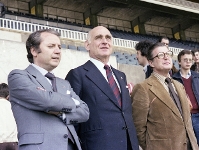 Many people put their names forward to be considered, but in the end
three frontrunners emerged with Ferran Ariño, Nicolau Casaus and Josep Lluís Nuñez. Ariño, who had
been president of Barça Atlètic, was considered by many as the candidate who would preserve the
status quo, although Montal insisted that he had no favourites. In turn, Casaus was the veteran and
had been involved with the club since the 1940's, above all with the supporters' clubs. Then there
was Nuñez who was well known as a successful businessman in the construction field and he brought a
message of renewal and that gave him the edge. Nuñez secured 10,352 votes, Ariño recorded 9,527 and
Casaus was third with 6,202.
Many people put their names forward to be considered, but in the end
three frontrunners emerged with Ferran Ariño, Nicolau Casaus and Josep Lluís Nuñez. Ariño, who had
been president of Barça Atlètic, was considered by many as the candidate who would preserve the
status quo, although Montal insisted that he had no favourites. In turn, Casaus was the veteran and
had been involved with the club since the 1940's, above all with the supporters' clubs. Then there
was Nuñez who was well known as a successful businessman in the construction field and he brought a
message of renewal and that gave him the edge. Nuñez secured 10,352 votes, Ariño recorded 9,527 and
Casaus was third with 6,202.
Victorious again
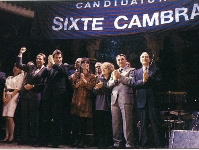 Nuñez enjoyed unprecedented success at the helm as he was re-elected on
August 18, 1981 and then again on May 2, 1985 when no other candidates were put forward to oppose
the standing president. Then, on April 1, 1989 there was to be another election and this time Sixte
Cambra, a man famous in the world of tennis, entered the race having previously been linked with
Josep Maria Fusté. The elections coincided with the the game against Real Madrid in the league and
the voting booths were set up in the Miniestadi. Nuñez was voted in for another term with 25,441 to
Cambra's 17,609.
Nuñez enjoyed unprecedented success at the helm as he was re-elected on
August 18, 1981 and then again on May 2, 1985 when no other candidates were put forward to oppose
the standing president. Then, on April 1, 1989 there was to be another election and this time Sixte
Cambra, a man famous in the world of tennis, entered the race having previously been linked with
Josep Maria Fusté. The elections coincided with the the game against Real Madrid in the league and
the voting booths were set up in the Miniestadi. Nuñez was voted in for another term with 25,441 to
Cambra's 17,609.
Angel Fernández
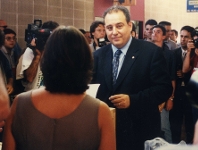 Nuñez was becoming accustomed to winning and on January 7, 1993 he was
again unopposed, but did not enjoy that same privilege in 1997 when three candidates in Angel
Fernández, Jaume Lloauradó and Josep Oriola all stood. The trio were to end the process by joining
forces with Fernández heading the group.
Nuñez was becoming accustomed to winning and on January 7, 1993 he was
again unopposed, but did not enjoy that same privilege in 1997 when three candidates in Angel
Fernández, Jaume Lloauradó and Josep Oriola all stood. The trio were to end the process by joining
forces with Fernández heading the group.
Again the voting took place in the Miniestadi while in Camp Nou there was a day of festivities with the first team being presented on the pitch. As predicted, Nuñez stayed in power with 24,025 votes to just 5,208 going for the opposition.
Click here to read about the first era of the election process for presidents at FC Barcelona.

All the results
1978
Date: 6 May, 1978
Members with right to vote: 53.643 Actual votes: 26.081
Voting percentage for candidates
Josep Lluís Núñez 10.352 39,7%
Ferran Ariño 9527 36,6%
Nicolau Casaus 6202 23,8%
None of the above 243 0,9%
Spoilt paper 153 0,6%
1989
Date, 1 April, 1989
Members with right to vote: 93.039 Actual votes: 46.633
Voting percentage for candidates
Josep Lluís Núñez 25.441 59,1%
Sixto Cambra 17.609 40,9%
None of the above 398 0,9%
Spoilt paper 215 0,5%
1997
Date, 27 July, 1997
Members with right to vote: 91.587 Actual votes: 31.485
Voting percentage for candidates
Josep Lluís Núñez 24.025 76,3%
Ángel Fernández 5209 17,5%
None of the above 1.893 6,0%
Spoilt paper 358 1,1%
Date: 6 May, 1978
Members with right to vote: 53.643 Actual votes: 26.081
Voting percentage for candidates
Josep Lluís Núñez 10.352 39,7%
Ferran Ariño 9527 36,6%
Nicolau Casaus 6202 23,8%
None of the above 243 0,9%
Spoilt paper 153 0,6%
1989
Date, 1 April, 1989
Members with right to vote: 93.039 Actual votes: 46.633
Voting percentage for candidates
Josep Lluís Núñez 25.441 59,1%
Sixto Cambra 17.609 40,9%
None of the above 398 0,9%
Spoilt paper 215 0,5%
1997
Date, 27 July, 1997
Members with right to vote: 91.587 Actual votes: 31.485
Voting percentage for candidates
Josep Lluís Núñez 24.025 76,3%
Ángel Fernández 5209 17,5%
None of the above 1.893 6,0%
Spoilt paper 358 1,1%
Share with